Dear reader,
Everyday financial economy is not about cutting costs — it’s about understanding timing, habits, and quiet decisions that compound over time.
If you enjoy saving money but refuse to compromise on quality, this article is for you.
Most people believe that buying clothes wisely means either spending a lot or constantly giving things up. But everyday financial economy rarely works through extremes. It works through awareness — especially around timing.
Buying clothes during seasonal transitions is one of those quiet strategies that doesn’t feel like sacrifice. You still buy good clothes. You still choose pieces you like. You simply stop paying the highest possible price for them.
This article explains why shopping between seasons leads to better prices, equal (or better) quality, and a calmer relationship with money — all without living in restriction.
Why Clothing Is a Daily Expense We Rarely Question
Clothing rarely feels like a financial problem because it doesn’t arrive all at once.
Purchases are spread across weeks and months. A shirt replaces another. A jacket feels necessary. Shoes are bought because the old ones “won’t last much longer.” None of these moments feel excessive or irresponsible. There is no single purchase that triggers concern.
And that is precisely why clothing becomes one of the most consistent everyday expenses.
Because it feels light, it escapes attention.
The real issue is not how much people spend on clothes.
It is how unconsciously those decisions are made.
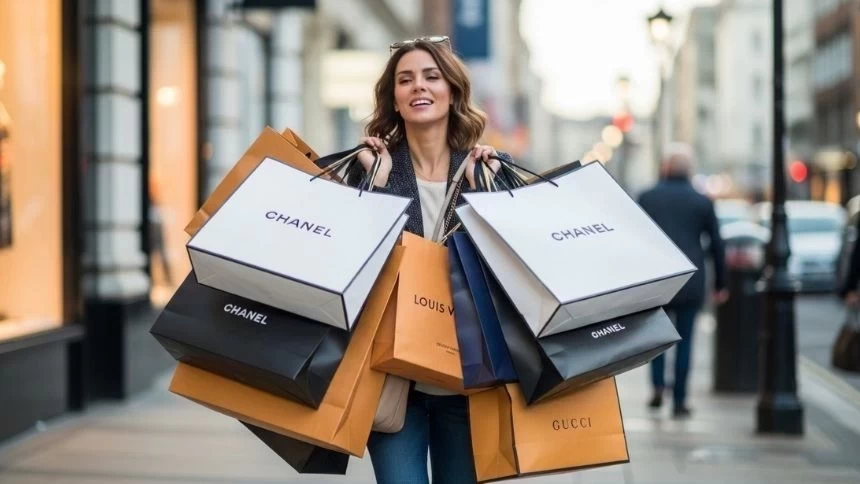
Most clothing purchases happen in moments of perceived urgency. Something feels missing. The season changes. A message appears announcing a new collection or a limited offer. These triggers bypass reflection and create a sense of necessity that feels logical in the moment.
People often buy clothes:
When something suddenly feels “needed,” even if alternatives exist
When a new season begins and expectations shift
When marketing compresses time and creates artificial pressure
Individually, these decisions feel reasonable. Together, they quietly form a pattern.
Prices rise because purchases are made at peak demand. Decision quality drops because choices are rushed. And over time, the wardrobe fills with items that cost more than they should and deliver less than expected.
Unaware shopping does not look careless.
It looks normal.
That is what makes it so powerful — and so expensive.
Awareness doesn’t require buying less.
It requires noticing when decisions are being made and why they feel necessary.
And once that awareness appears, the entire relationship with everyday spending begins to shift.
Key Insight
Clothing becomes expensive not because we buy too much, but because we buy at the worst moments.
How Seasonal Pricing Actually Works
Retail pricing does not change randomly. It follows predictable cycles shaped by demand, inventory pressure, and consumer behavior. Once these cycles become visible, the strategy stops feeling like a trick and starts feeling obvious.
The full season is the most expensive moment to buy.
At the beginning of a season, collections are new and fully stocked. Sizes are available, displays are complete, and nothing feels scarce from the store’s perspective — yet everything feels urgent from the consumer’s side.
This is the phase when retailers rely on emotional buying.
Weather shifts create discomfort. Suddenly, last season’s clothes feel inadequate. Trends appear everywhere — in windows, online ads, social feeds — reinforcing the idea that being “ready” requires buying now.
During this period:
Prices remain at their highest
Discounts are minimal or symbolic
Choice feels wide, but time feels compressed
Consumers are not paying for better quality.
They are paying for immediacy.
What drives full-season pricing is not production cost — it is perceived necessity. The belief that waiting is risky and that preparation must happen immediately.
That is why prices reflect urgency, not value.
When people buy at this stage, they are often responding to discomfort rather than intention. Decisions are made quickly, justified later, and repeated every season.
Understanding this phase is essential, because it reveals an important truth:
high prices are rarely about better clothes — they are about emotional timing.
And once that becomes clear, the next phase of the cycle naturally invites a different kind of decision.
Seasonal Transitions: The Quiet Opportunity
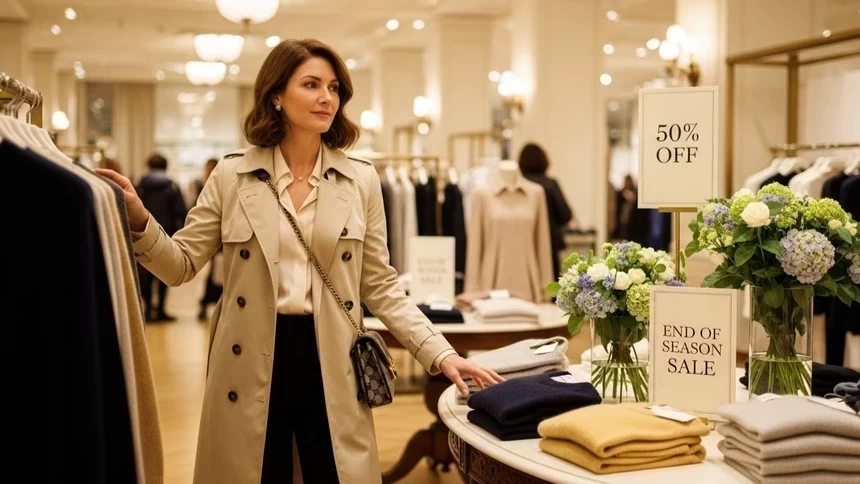
Between seasons — late winter, early spring, late summer, early fall — retailers face a different reality.
They need to:
Clear inventory
Make space for upcoming collections
Reduce holding costs
Consumers gain:
Better prices
More negotiating power
Time to think
Key Insight
During seasonal transitions, urgency drops — and value rises.
Why Buying Between Seasons Improves Quality, Not Just Price
Saving money is only half the benefit. The deeper change happens in how you choose.
Decisions Slow Down
When clothes are not urgently needed, choices become calmer.
You start asking:
Will this still work next year?
Is the fabric durable?
Does this fit my real life?
Does it match what I already own?
This shift is subtle, but powerful. It reflects understanding what money really represents emotionally, not just financially.
The Same Budget Buys Better Materials
Between seasons, the same amount of money often buys:
Wool instead of acrylic
Leather instead of synthetic
Better stitching and structure
Over time, wardrobes become smaller — and far more reliable.
Key Insight
When urgency disappears, quality becomes visible.
The Emotional Pressure of Seasonal Shopping
Seasonal shopping is rarely logical. It’s emotional.
Marketing reinforces:
“You need this now”
“This is the new standard”
“Everyone is already wearing this”
That pressure pushes people to buy quickly and justify later.
Between seasons, that pressure fades. And with it, emotional spending.
This is closely connected to the emotional patterns behind financial discipline — where spending is driven by fear of being unprepared rather than real need.
Everyday Financial Economy in Practice
This habit works because it doesn’t feel restrictive.
You’re not:
Avoiding clothes
Settling for less
Living in deprivation
You’re simply choosing when to buy.
That is everyday financial economy:
small adjustments that quietly improve outcomes.
Key Insight
True saving often comes from timing, not cutting.
How This Habit Reduces Financial Stress
Buying better clothes less often creates emotional relief:
Fewer impulse purchases
Less wardrobe clutter
Less guilt after spending
More trust in your decisions
It supports the idea of organizing money without emotional pressure, where systems serve life instead of controlling it.
Practical Guidelines for Buying Clothes Between Seasons
1. Shop for the Future, Not the Weather
Try items imagining next year, not next week.
2. Prioritize Core Pieces
Coats, jackets, shoes, jeans, and neutral basics offer the best long-term value.
3. Ignore Discount Urgency
A low price doesn’t matter if the item doesn’t truly fit your life.
4. Notice What You Actually Wear
Patterns matter more than trends.
These habits reflect the difference between reacting and choosing — the heart of financial awareness versus pure control.
Why This Strategy Works Long-Term
Unlike strict budgeting rules, this habit:
Requires no tracking
Creates no guilt
Fits any income level
It works because it respects human behavior.
And habits that respect behavior tend to last.
Key Insight
Sustainable economy comes from awareness, not pressure.
FAQ — Buying Clothes Between Seasons
Is buying clothes between seasons really worth it?
Yes. Prices drop while quality remains the same, allowing better long-term value.
What types of clothes are best to buy between seasons?
Outerwear, shoes, denim, knitwear, and classic pieces benefit the most.
Does this work for people on a tight budget?
Yes. The advantage scales with any income level because it improves timing, not volume.
Will clothes still feel current next year?
Timeless pieces age far better than trend-driven ones.
How does this reduce financial stress?
It removes urgency and guilt, creating calmer, more confident spending decisions.
Conclusion
Buying at full season means paying for urgency and emotional pressure, not quality. Shopping during transition phases gives you better value — the same high-quality items at lower prices — while giving your decisions space to be thoughtful. Awareness transforms timing into financial advantage.
Aspect | Full Season | Transition Phase |
|---|---|---|
Timing | Beginning of the season | Late in the season / between seasons |
Prices | Highest | Significantly lower due to clearance |
Discounts | Rare or symbolic | Common and meaningful |
Emotional Pressure | High — urgency and trend-driven | Low — calm and intentional |
Decision Quality | Often rushed | More deliberate and reflective |
Quality Available | Same as later, but at full price | Same high quality for less |
Consumer Advantage | Minimal | Maximum value per purchase |
This is the foundation of everyday financial economy:
quiet choices that align money with life.